How Are Clay Pigeons Made?
From limestone and binder to the flying targets we shoot
We call them clay pigeons, but modern clay pigeon targets are not normally made from clay at all.
The familiar targets thrown from traps at shooting grounds are carefully manufactured so they are strong enough to survive packing, transport and launching, yet brittle enough to break when struck by shotgun pellets.
So how are clay pigeons made, what are they actually made from, and why does a clay shooting target have its distinctive shape? Let's take a closer look.
What Are Clay Pigeons Made Of?
Despite the name, modern clay targets aren't simply made from clay
Traditional clay shooting targets are commonly manufactured using a mixture based on finely ground limestone combined with a binding material such as petroleum pitch or resin.
The ingredients have to perform two apparently contradictory jobs. A clay pigeon must be tough enough to be manufactured, stacked, boxed, transported, loaded into a mechanical trap and accelerated into the air without breaking.
At the same time, the finished clay target must be brittle enough to produce a clear visible break when sufficiently struck by shotgun pellets.
Manufacturers can also use alternative materials and binders, including products designed to reduce the environmental impact of conventional clay targets.
How Are Clay Pigeons Made Step by Step?
From raw ingredients to a finished clay shooting target
Preparing the Raw Materials
Finely ground mineral material, commonly limestone, forms a substantial part of many conventional clay targets. It is combined with a binder to create the material from which the target can be formed.
Heating and Mixing
The ingredients are mixed under controlled conditions to produce a consistent material. Consistency is important because thousands of clay pigeons need to behave in essentially the same way.
Moulding the Clay Target
The prepared mixture is fed into moulding machinery which forms the distinctive circular target, including its raised centre, outer rim and aerodynamic profile.
Cooling and Hardening
After moulding, the target cools and hardens. It needs sufficient strength to survive handling and the rapid acceleration produced when it is launched from a clay trap.
Colour and Visibility
Clay pigeons are produced in highly visible colours such as orange, white, black, pink and green. Different colours can provide better visibility against different backgrounds.
Packing and Transport
Finished clay targets are stacked and boxed for transport. They must survive the journey to the shooting ground before they ever reach a trap.
Watch How Clay Pigeons Are Made
See the clay target manufacturing process in action
 ►
Click to watch how clay targets are made
►
Click to watch how clay targets are made
How Are Clay Targets Made?
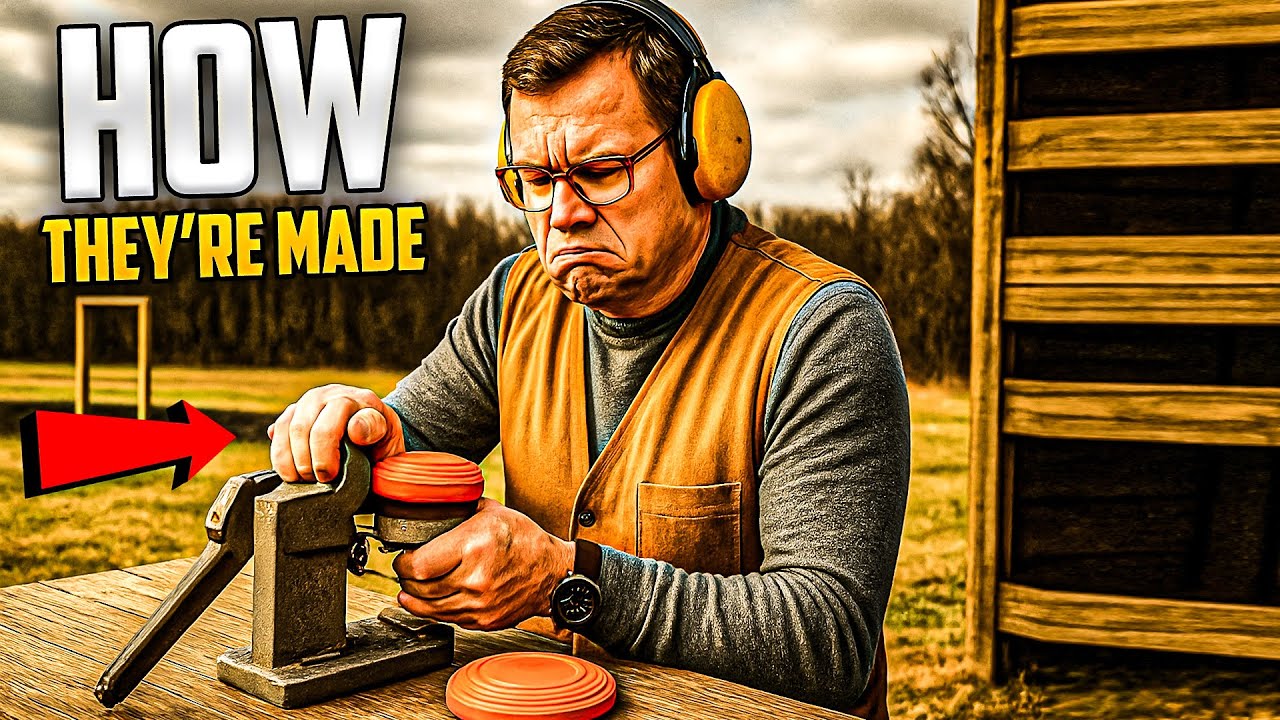
This video provides a useful look at the process used to manufacture clay shooting targets. Click the preview to watch the full video on YouTube in a separate tab.
Inside a Clay Pigeon Factory
Making thousands of apparently simple targets requires precise machinery
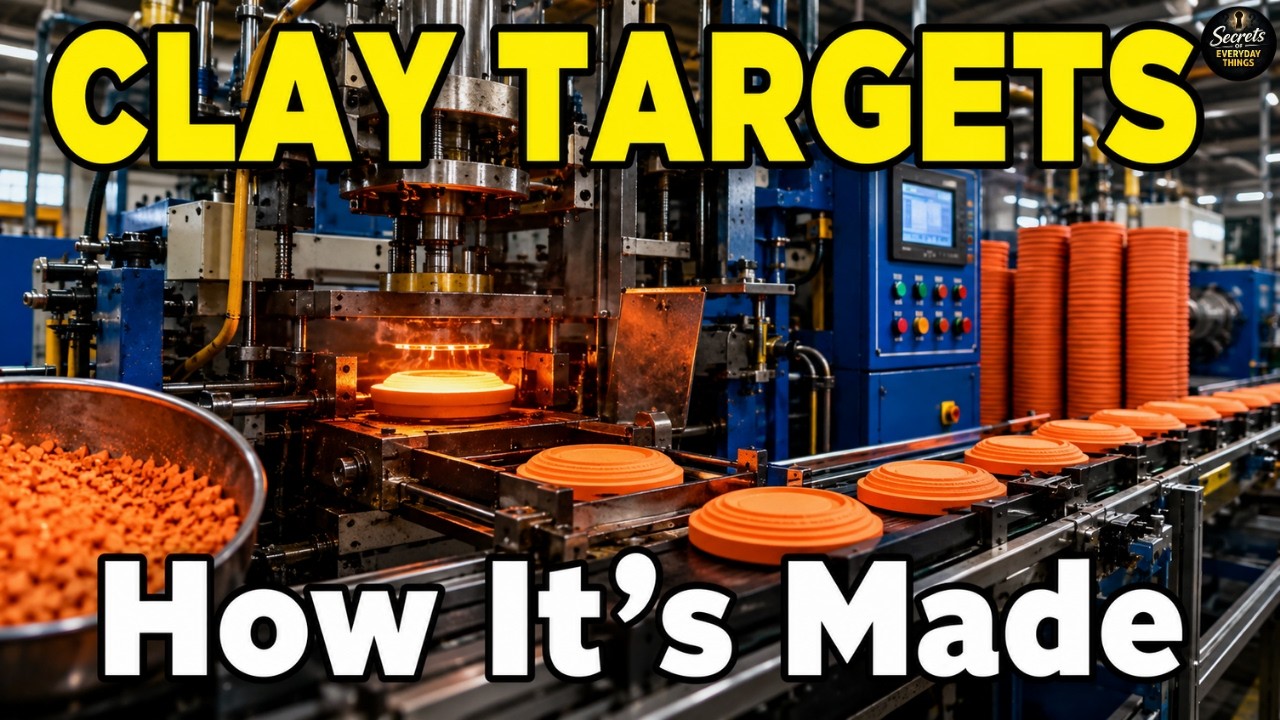
A modern clay target factory can manufacture enormous numbers of targets. Shooting grounds can use thousands of clay pigeons, so manufacturers need to produce large quantities of virtually identical targets efficiently.
Although an individual clay pigeon appears simple, its dimensions, shape and strength need to remain sufficiently consistent for the targets to stack correctly, work reliably in mechanical traps and produce predictable flight characteristics.
Watching the machinery at work shows that manufacturing a clay pigeon is considerably more technical than the finished target might suggest.
 ►
Click to watch inside the clay target production process
►
Click to watch inside the clay target production process
Inside the Clay Target Manufacturing Process
This second video gives another view of clay target production and the machinery involved in producing shooting targets on a commercial scale. Click the preview to watch it on YouTube in a separate tab.
Why Is a Clay Pigeon Shaped Like a Saucer?
The familiar shape isn't simply decorative
The profile of a clay pigeon allows it to be launched efficiently from a trap and travel through the air in a predictable manner. The circular rim also provides a consistent surface for the trap's throwing mechanism.
The raised centre and thinner outer areas contribute to the target's strength and flight characteristics while also allowing it to produce a visible break when hit.
Target design becomes particularly interesting in sporting clay pigeon shooting, where different shapes and sizes can be used to produce dramatically different presentations.
Are All Clay Pigeons the Same?
Different clay targets create very different challenges
Standard Clay Target
The familiar full-size clay pigeon used extensively throughout clay shooting. It can be thrown at many different speeds, angles and trajectories.
Midi and Mini Targets
Smaller diameter clay targets can appear particularly fast because of their reduced size and are frequently used to create challenging sporting presentations.
Rabbit Target
A stronger target designed to travel across the ground rather than fly through the air. Rabbits can bounce and change speed, making their line surprisingly difficult to judge.
Battue Target
A thin target designed to turn during flight. It can initially show very little visible surface before suddenly exposing its full face to the shooter.
Why Do Clay Pigeons Break?
The clever part is making a target strong and fragile at the same time
One of the most interesting parts of clay target manufacture is achieving the correct balance between strength and brittleness.
If a clay pigeon were too fragile, targets would break during manufacturing, transport or when launched from the trap.
If it were too strong, a shooter could strike the target with pellets without producing the clear visible break associated with clay pigeon shooting.
The material, thickness, shape and manufacturing process therefore work together to produce a target capable of surviving considerable handling before breaking when sufficiently struck.
Why Are They Called Clay Pigeons?
The name is a reminder of the history of shooting sports
Before artificial targets became established, live pigeons were used in shooting competitions. Artificial alternatives were subsequently developed as shooting sports evolved.
Early artificial targets included glass balls and disc-shaped targets. Target design and manufacturing materials changed considerably over time, but the expression “clay pigeon” survived.
Today the term is widely used for the targets encountered in trap, skeet and sporting clay shooting.
Now Try Breaking a Clay Pigeon
Reading how they're made is interesting. Shooting one is considerably more fun.
Guns & Clays provides clay pigeon shooting experiences and professional shooting tuition near Cambridge. Complete beginners are welcome and the equipment required for the session is provided.
Clay Pigeon Shooting Experiences Clay Shooting Tuition