By Richard Halsall, Guns & Clays | Sources reviewed: 9 October 2026
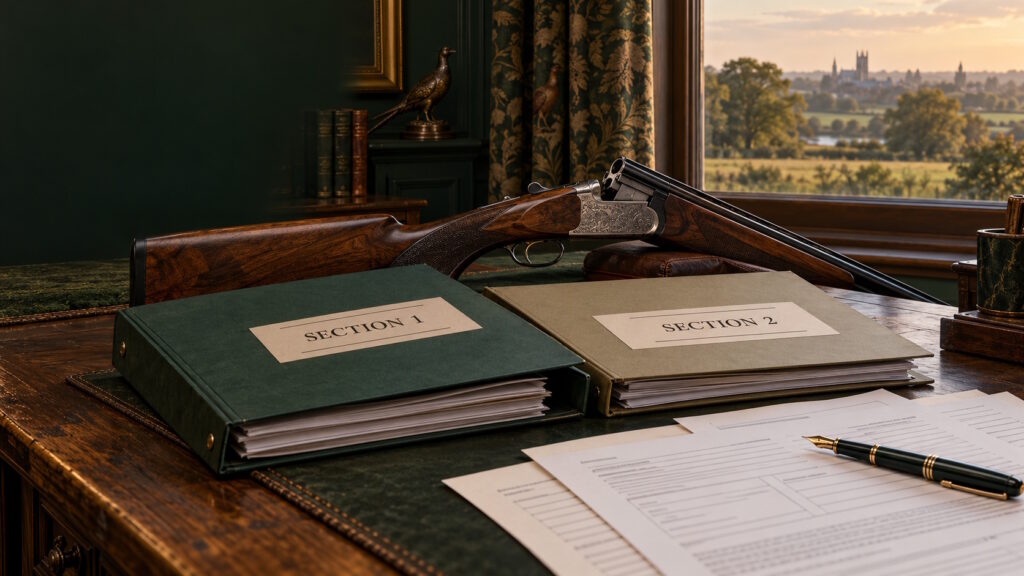
Gun licences combined is a short way of describing proposals to bring Section 2 shotgun licensing closer to the Section 1 firearms system. For clay shooters, the important questions are what would change, whether it would improve public safety, and how much additional work it would create.
A clay shooter may own a competition gun, a spare or a lighter gun better suited to a different discipline. Buying, replacing and borrowing those guns are practical parts of the sport. Changes to licensing could affect all of them, depending on the final rules.
Has the law already changed? The alignment discussed here remains a proposal. Our source review found no confirmed implementation date for a wholesale merger of Section 1 and Section 2.
The September 2026 changes to certificate application forms and reporting requirements are separate. They do not, by themselves, mean ordinary sporting shotguns have moved into Section 1.
Gun licences combined: what is being proposed?
The debate concerns the distinction between Section 1 firearms and Section 2 shotguns under the Firearms Act 1968. Most ordinary shotguns used for clay shooting fall within Section 2. Some shotguns fall within Section 1, so the distinction is about the legal classification of the gun, rather than simply whether someone shoots clays.
Both licensing systems involve suitability and public safety checks. However, Section 1 involves individual firearm authorisations and good reason for each firearm. The systems also differ in how purchases, ammunition and borrowing are handled.
HMICFRS's August 2026 review recommended alignment. BASC and the CPSA oppose merging the systems without clear evidence that doing so would improve public safety. Both organisations also support reform of how licensing is administered.
Read the BASC response to the licensing review and the CPSA response .
The phrase “gun licences combined” can suggest a simple change of paperwork. What matters is whether the legal requirements attached to shotgun ownership would change. Combining administration and imposing additional ownership restrictions are different decisions.
✕ Gun licences combined: nine potential negatives
These are concerns about full alignment, not a list of rules already introduced. BASC has published possible consequences of applying Section 1-style controls to ordinary shotguns. The eventual effects would depend on legislation, exemptions and transitional arrangements.
-
1. Approval for individual purchases
Adding or replacing a shotgun could require prior authorisation, making transactions slower. -
2. Justification for each gun
Shooters could need to explain why they require a second competition gun, a spare or another bore. -
3. More restrictive conditions
Conditions could limit purposes or places of use. -
4. Club membership or use requirements
Full alignment could introduce additional expectations about membership and evidence of regular use. -
5. Less flexibility to borrow
The existing Section 2 short-loan arrangements could change. -
6. Cartridge limits and storage controls
Purchases, possession and security requirements for ammunition could become more restrictive. -
7. Changes affecting younger shooters
Certificate and lending rules could reduce existing opportunities. -
8. Difficulties retaining heirlooms
Owners could face additional questions about guns kept for reasons other than regular shooting. -
9. More work and potential delays
Additional approvals could increase pressure on licensing departments and costs for applicants.
Sources: BASC's assessment of possible effects and the Countryside Alliance alignment briefing . Increased delays are a risk to assess, rather than an established outcome.
Watch: MPs challenge shotgun licensing proposals
Fieldsports Channel's coverage examines opposition expressed during the Westminster Hall debate on 23 February 2026. It provides background to the argument over keeping the two licensing systems separate.
Video: Fieldsports Channel, published 27 February 2026. Watch directly on YouTube . The title describes MPs' opposition. The debate was not itself legislation preventing future reform.
This video predates the August inspection report and the September application changes. It should therefore be read alongside the later written sources below.
What could change in everyday clay shooting?
The practical concern with gun licences combined is the number of ordinary decisions that might need additional approval. The following examples show questions that any detailed proposal should answer.
Buying a gun that fits
A shooter may discover that their first gun does not fit well. They may want to trade it for another model after taking advice or lessons. A future approval process should explain how replacement purchases would work and how long a decision would take.
A delay could mean missing the opportunity to buy a suitable second-hand gun. Dealers would also need to know whether holding stock for a customer awaiting approval would become a routine part of doing business.
Keeping a spare competition gun
A regular competitor may keep a spare because repairs can take time. Someone entering competitions in different disciplines may also have a practical reason for owning more than one shotgun.
The question is how those reasons would be assessed. Applicants should not have to guess what evidence a licensing department expects, or receive different answers to the same circumstances simply because they live in different areas.
Borrowing while a gun is repaired
Temporary access to another suitable gun can keep a shooter participating while their own is unavailable. If borrowing arrangements changed, legislation would need to explain what remained possible and who would need authorisation.
The same care would be needed for instruction and supervised participation. Our concern is that a reform could interrupt ordinary sporting activity unless exemptions and lending provisions were considered from the start.
Buying cartridges for practice
Clay shooters can use substantial quantities of cartridges during practice and competitions. If future rules imposed ammunition limits, those limits would need to reflect legitimate sporting use and provide a workable way to request changes.
These examples are our analysis of practical questions. They should not be mistaken for a prediction that every possible restriction will be adopted.

Could gun licences combined make delays worse?
That depends on the work created and the resources available. An extra approval requirement creates a task that someone must receive, assess, record and communicate. If the volume rises without sufficient staff, waiting times could grow.
A credible reform plan should estimate the number of new transactions, the time needed to process them and the cost. It should also explain how existing grants and renewals would be protected while staff handled the additional work.
Our shotgun certificate delays tracker examines waiting times and outstanding applications. It provides a way to follow service performance rather than relying entirely on promises of improvement.
Comparisons require care. An average for completed applications does not tell us how long unfinished cases have waited. Reporting periods and definitions can also differ between forces.
That is why any assessment of gun licences combined should examine both the typical processing time and the oldest unresolved applications. A faster average is less reassuring if a significant group of applicants remains stuck.
What public safety evidence should be published?
Public safety must remain central to firearms licensing. The question is whether a proposed requirement would help identify or prevent a specific risk, and whether there is a better way to address that risk.
We would expect an explanation of the problem, the evidence supporting the proposed solution and the alternatives considered. The assessment should distinguish failures to apply existing safeguards from gaps in the law itself.
It should also explain how success would be measured. Counting extra forms or approvals is not enough. Relevant measures could include the quality of risk assessments, the handling of warning information and consistent application of guidance.
Shooters should be able to examine the evidence without having to accept either that every restriction is necessary or that every proposed change is unjustified. The test is whether the particular measure is supported and proportionate.
Could administration improve without merging the rules?
Yes, these are separate policy choices. BASC and CPSA support a specialist national licensing authority while opposing Section 1 and Section 2 alignment.
Better training, clearer accountability and consistent processes can be considered alongside the existing legal distinction. Supporting improvements to the licensing service does not require accepting every proposal to change shotgun ownership requirements.
We are also examining what shooting organisations have raised with government through our investigation into BASC, CPSA and shotgun licence delays .
Our view: explain the benefit before adding the burden
Gun licences combined could have consequences far beyond the appearance of a certificate. If reform creates more permissions, approvals and restrictions, government should explain what each one achieves.
Clay shooters should receive a clear account of the safety benefit, the cost, the expected waiting time and the arrangements for existing owners. Licensing departments should receive a realistic staffing plan.
We support careful scrutiny of suitability and effective action where there are genuine concerns. We also want a service that deals fairly with lawful applicants and communicates decisions clearly.
Our position is that the case for changing the rules must be demonstrated. Additional administration should not be treated as proof that the underlying licensing decisions will become better.
What should a detailed reform proposal explain?
Before any implementation, existing certificate holders would need answers about the transition. Would certificates remain valid until their present expiry dates? Would guns already owned receive authorisation automatically, or would owners have to submit additional information?
Buyers and dealers would need to understand the treatment of pending purchases. Clubs and instructors would need clear guidance on borrowing and supervised use. Families would need an explanation of any changes affecting young shooters.
Applicants should also know how errors would be corrected and disputed decisions challenged. A reform that gives officials additional decisions to make should explain the safeguards around those decisions.
These questions matter regardless of whether an individual supports or opposes gun licences combined. They are the practical details that determine whether a system can operate fairly.
Gun licences combined: frequently asked questions
Have Section 1 and Section 2 already been merged?
Our review of the cited sources on 9 October 2026 found no confirmed wholesale merger or implementation date. The alignment recommendation should not be presented as a change already in force.
Would every shotgun move into Section 1?
The exact scope would depend on any eventual legislation. It is not possible to state the final treatment of every shotgun from a recommendation alone.
Would I have to surrender or destroy my existing guns?
The alignment recommendation alone does not establish a blanket surrender or destruction requirement. Existing ownership and transitional arrangements would need to be addressed in the actual legislation.
Would gun licences combined mean compulsory club membership?
BASC identifies membership and use requirements among possible effects of full alignment. That is a concern to examine, not confirmation that a new universal membership rule has been introduced.
Should I change how I apply for a certificate now?
Follow the current instructions from your police force. Use the application forms and requirements that apply at the time of submission. Do not alter your arrangements based solely on speculation about future alignment.
What can I do if a consultation is published?
Read the questions and respond to the actual proposals. Explain your circumstances with specific examples: competition disciplines, replacement purchases, borrowing or the use of a spare gun. Identify the practical effect and suggest a workable alternative where appropriate.
Where can I follow further developments?
Visit our independent investigations and analysis for related reporting. We will distinguish announcements, consultations, enacted legislation and implementation dates.
Sources and further reading
- BASC response to the HMICFRS licensing review — published 28 August 2026.
- CPSA response to the HMICFRS licensing report — published 2 September 2026.
- BASC's assessment of possible consequences — published 26 November 2025; describes potential effects.
- Countryside Alliance briefing on Section 1 and Section 2 alignment — February 2026, PDF.
- Firearms Act 1968 — statutory background.
- Fieldsports Channel: MPs reject shotgun licensing proposals — published 27 February 2026.
The associations' assessments are attributed to them. Practical examples, questions for policymakers and the Guns & Clays view are our analysis. This article provides general information rather than advice on an individual certificate or legal dispute.