How to Read a Clay Target
How to read a clay target starts with understanding what the target is doing before you move the gun. Its line, apparent speed, angle, distance and whether it is rising or falling can all influence how you approach the shot.
See the Target First
What Does “Reading the Clay” Actually Mean?
Reading a clay means recognising its flight quickly enough to make good decisions before committing to the shot.
Rather than reacting immediately, first identify where the target appears, where it is travelling, how quickly it appears to be moving and where you are likely to have the clearest opportunity to take the shot.
Experienced shooters often make this look automatic, but they are processing several pieces of information at the same time.
The better you become at reading the target, the less rushed the shot can feel.
If you are still developing these skills, our clay pigeon shooting tuition in Cambridgeshire can help you practise them on real targets.
Five Things to Read Before You Shoot
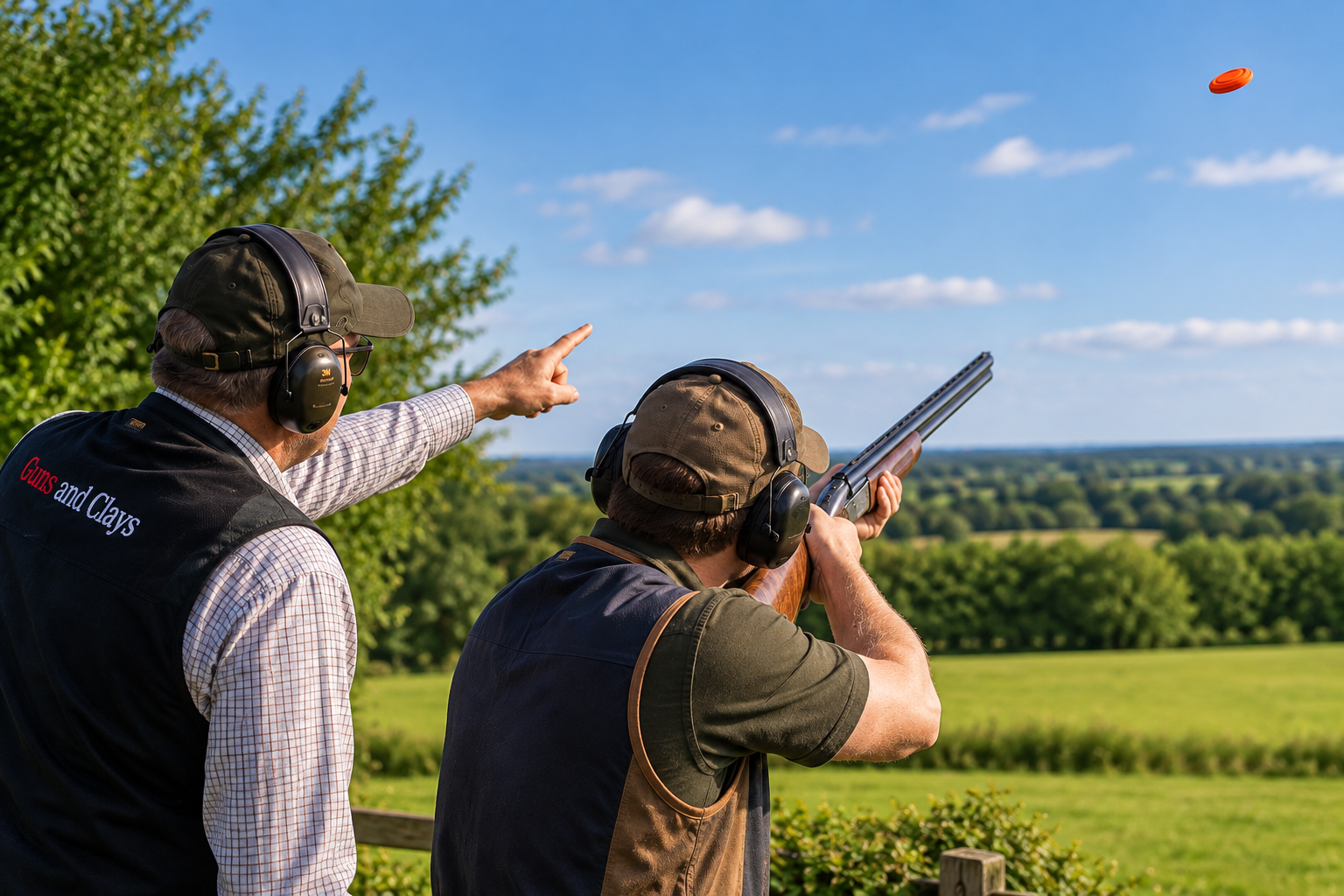
Every clay presentation is different, but the same basic observations can be applied to almost every target.
Target Line
First establish the direction of travel. Is the clay crossing, quartering, going away, incoming, rising or falling?
Apparent Speed
Targets can appear faster or slower depending on their angle, distance and direction of travel. What your eyes perceive is important when deciding how to approach the shot.
Distance
Judging whether the clay is close, medium range or further away helps you understand how much time you have and how its movement will appear from your position.
Angle
A clay crossing your line of sight can show its movement clearly. Quartering and going-away targets can be more deceptive because some of their movement is towards or away from you.
Rising or Falling
Establish whether the clay is still climbing, approaching the top of its flight or already beginning to fall.
Visual Clarity
Identify where you can see the clay most clearly. Background, light and surrounding vegetation can all influence how easily the target can be followed.
Different Clays Need Different Reading
Recognising the basic type of target helps you understand what the clay is likely to do next.
Crossing Targets
A crossing clay travels broadly from one side to the other. Its direction is usually easy to recognise, although speed and distance can still be deceptive.
Quartering Targets
Quartering clays travel partly across and partly towards or away from the shooter. They can appear slower because not all of their movement is across your field of view.
Going-Away Targets
A going-away target can initially appear straightforward, but the available shooting opportunity may reduce quickly as the target travels further away.
Incoming Targets
Incoming clays can appear relatively slow at distance before seeming to increase in speed as they approach the shooter.
Rising Targets
With a rising target, establish whether it is climbing strongly or beginning to flatten towards the top of its flight.
Falling Targets
Falling targets require the shooter to recognise the downward line early rather than continuing to treat the clay as though it were travelling level.
Watch the Whole Flight
A Clay Changes Throughout Its Flight
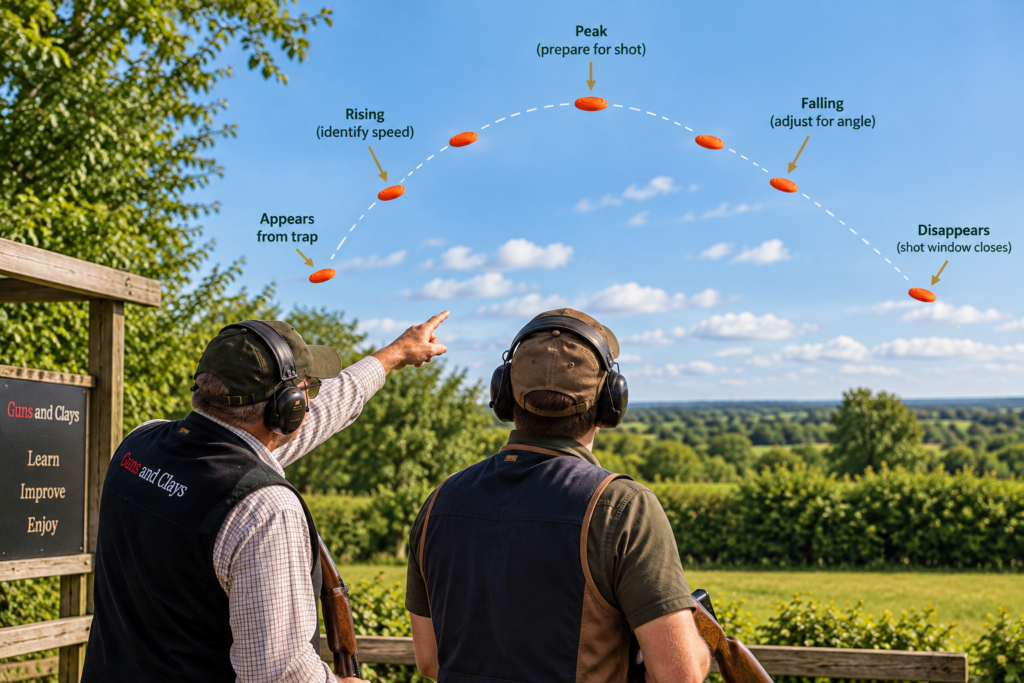
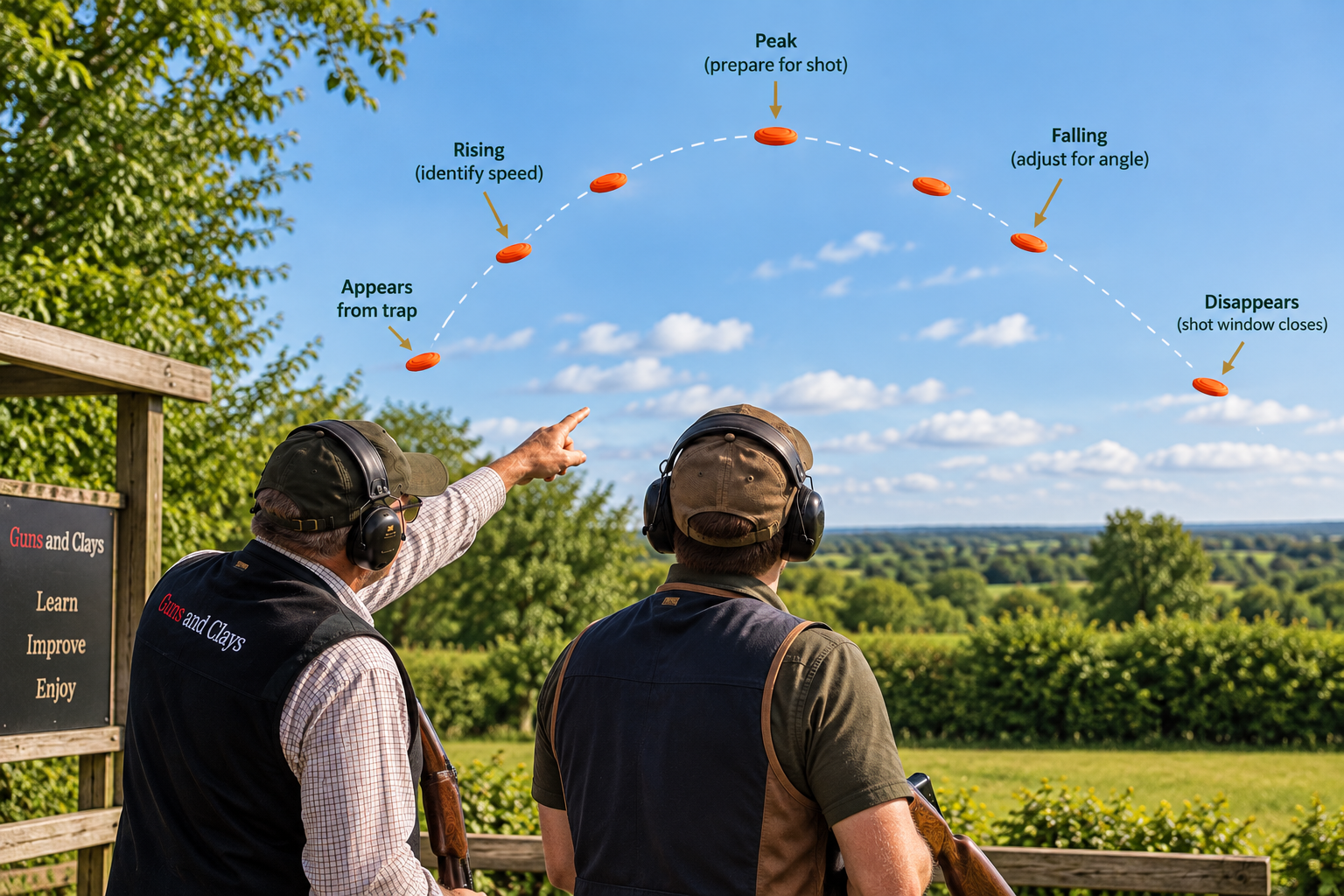
A target does not necessarily behave in exactly the same way throughout its journey.
It may initially accelerate away from the trap, continue rising, reach the top of its flight and then begin to lose height.
Watching the complete presentation before shooting can help you recognise where these changes occur.
This allows you to choose a sensible area in which to take the shot rather than simply reacting the moment the clay appears.
Pick-Up Point, Hold Point & Kill Point
Breaking the target's flight into simple reference points can help make the shot more organised and repeatable.
Pick-Up Point
This is the area where you expect to see the target clearly enough to identify its line and begin tracking it visually.
Hold Point
The hold point is where the gun begins before the target is called. Its position should allow smooth movement without unnecessarily obscuring your view of the clay.
Kill Point
The kill point is the area where you plan to complete the shot. Ideally this is somewhere the target is clearly visible and your gun movement can remain controlled.
See the Clay Before Moving the Gun
Many poor shots begin because the shooter reacts with the gun before properly seeing the target. Give your eyes the opportunity to identify the clay and its direction before committing to the movement.
Reading a Clay Is Primarily a Visual Skill
Your eyes provide the information that allows your body and the shotgun to respond to the target.
Keep Your Attention on the Target
Strong visual focus helps you recognise changes in line, speed and direction while the shot develops.
If your attention moves away from the target and onto the barrels, it becomes much harder to read what the clay is actually doing.
This is one reason good clay shooting often looks smooth rather than hurried: the shooter is responding to a clearly seen target.
Mistakes Shooters Make When Reading Clays
- Moving or mounting the gun before the target has been clearly seen.
- Looking at the barrels instead of maintaining visual attention on the clay.
- Assuming the target's line rather than watching its actual flight.
- Misjudging a quartering target because its movement across the shooter's vision appears slower.
- Trying to shoot too early before the clay becomes visually clear.
- Waiting too long and allowing a going-away target to travel beyond the preferred shooting area.
- Changing the planned shot point after the target has already been called.
Learn to Read Clays Without Firing a Shot
Target reading improves with experience, but you do not have to fire cartridges every time to practise it.
Watch Other Shooters
When waiting for your turn, watch the clay rather than concentrating solely on the person shooting it.
Try to identify where the target first becomes clearly visible, whether it is rising or falling, how quickly it appears to move and where you would choose to take the shot.
Doing this regularly develops your ability to recognise targets before you ever mount the gun.
Put Target Reading Into Practice
Shooting Tuition
One-to-one tuition can help develop target recognition, visual focus, gun movement and consistency across different clay presentations.
View Shooting TuitionGuns & Clays Shooting School
Learn the fundamentals of clay shooting including stance, gun mount, visual focus, target reading and gun movement.
Visit the Shooting SchoolShotgun Gun Fit
Good target reading works best when the shotgun mounts naturally and places your eye consistently in the correct position.
Read About Gun FitMore Clay Shooting Advice
For additional information on clay shooting techniques, coaching and common target presentations, the CPSA and BASC both provide useful guidance for UK shooters.
CPSA – How to Hit
The CPSA's How to Hit series covers basic clay-shooting methods and practical approaches to common English Sporting targets.
View CPSA GuidanceBASC – Clay Shooting
BASC provides information for people getting started in clay shooting, including coaching, lessons and developing shotgun shooting skills.
View BASC GuidanceMore Guns & Clays Guides
Browse our clay shooting advice and practical guides covering technique, gun fit, stance and other aspects of shotgun shooting.
View Our Shooting GuidesSee the Clay Before You Shoot It
Better clay shooting begins with better information. Learn to recognise the target's line, apparent speed and best shooting area before committing to the gun movement.
View Shooting Tuition