Play Time
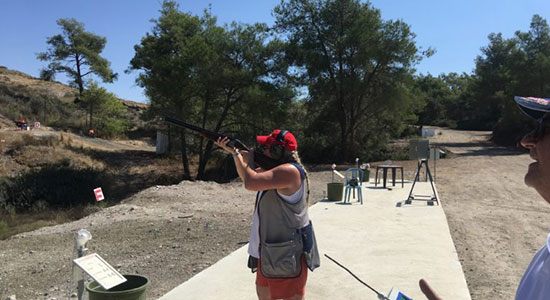
Come have a go at Clay Pigeon Shooting its fun!
All you need is yourself
Clay Pigeon Shooting
Clay pigeon shooting encompasses a variety of disciplines, each with its unique characteristics and challenges. The most prominent disciplines include Trap, Skeet, and Sporting. Each is designed to test the skills of the shooter in different ways.
Clay Shooting Disciplines all explained below
Trap shooting involves shooting at clay targets launched away from the shooter at varying angles, requiring precision and quick reflexes.
Skeet shooting features targets that cross in front of and behind the shooter, promoting accuracy in a more confined space.
Sporting clays simulate hunting scenarios, with targets launched in various directions and at different speeds. This makes it the most diverse and dynamic discipline.
Collectively, these disciplines contribute to the richness of clay shooting, appealing to a wide range of enthusiasts and fostering a vibrant shooting community.
Automatic Ball Trap is the second most popular Trap discipline shot in the UK next to DTL. An ABT squad consists of six shooters. Only one target is taken at each stand before moving to the right for the next target.
Two shots are allowed at each target, but unlike DTL, either shot scores equally. ABT targets are faster and have a greater range of angles and heights than DTL. They are thrown on random trajectories from a single trap in front of the centre stand. Ref: CPSA at https://www.cpsa.co.uk/disciplines. More Clay Shooting dis
Compak Sporting and Sportrap are often confused due to their similarities. However, Compak Sporting has one less stand and a different order of shooting.
There are three compulsory target trajectories: right to left, left to right, and straight on, along with two additional trajectories at the designer’s discretion. Five traps provide a variety of targets, and a sign in front of each enclosure informs shooters of the shot combinations. Ref: CPSA at https://www.cpsa.co.uk/disciplines and more clay pigeon shooting disciplines
Double Rise uses the same procedures and layouts as DTL. Targets are thrown simultaneously on separate trajectories.
Unlike DTL, where the trap is set to a random pattern, the traps for Double Rise are fixed to throw one target to the left and one to the right. Each shooter fires one shot at each target. With five stands and two targets per stand, rounds are shot in multiples of five doubles. Ref: CPSA at https://www.cpsa.co.uk/disciplines and more clay pigeon shooting disciplines
Double Trap is an Olympic discipline similar to Double Rise. Instead of a single trap throwing two fixed trajectory targets, three trap machines alternate to throw simultaneous doubles from any two traps. The procedures and layout are the same as Olympic Trap. Ref: CPSA at https://www.cpsa.co.uk/disciplines and more clay shooting disciplines
Skeet is a word of Scandinavian origin, with the discipline originating in America. Targets are thrown in singles and doubles from two trap houses situated 40 metres apart.
The traps are at opposite ends of a semicircular arc with seven shooting positions. The targets are thrown at set trajectories and speeds, including English Skeet, Olympic Skeet, and American (NSSA) Skeet. Ref: CPSA at https://www.cpsa.co.uk/disciplines more clay shooting disciplines
Ref: CPSA at https://www.cpsa.co.uk/disciplines
more clay shooting disciplines
The English Sporting discipline has the sport’s largest following. Unlike other disciplines, Sporting allows for a great variety of trajectories, angles, speeds, elevations, and distances.
This discipline was originally devised to simulate live quarry shooting, leading to some names commonly used on Sporting stands: Springing Teal, Driven Pheasant, and others. Ref: CPSA at https://www.cpsa.co.uk/disciplines
more clay shooting disciplines
This discipline can have an infinite variety of ‘stands’ . ENGLISH SPORTING is the most popular form of clay shooting in the UK, and a course or competition will feature a given number of stands each of which has a predetermined number of targets, all travelling along the same path and speed, either as singles or doubles. Each stand will feature a different type of target i.e. crosser, driven, quartering etc. INTERNATIONAL (FITASC) SPORTING gives a much greater variety of targets in terms of trajectory and speed, and is shot by squads of six competitors in rounds of 25 targets at a time. Super Sporting is a hybrid of the two preceding varieties. There are also other formats such as Compak Sporting and Sportap in which five cages are surrounded by a number of traps, and shooters fire a specific combinations or singles from each stand according to a program displayed in front of the cage. Ref: CPSA at https://www.cpsa.co.uk/disciplines
more clay shooting disciplines
In DTL and Single Barrel events, a handicapping system may be used for different classes of shooter. C class shooters stand at 17 yds (15.5m), B class at 19 yds (17.4m), A class at 21 yds (19.2m), AA class at 23 yds (21m). For safety reasons only shooters of the same class are squadded together. Ref: CPSA at https://www.cpsa.co.uk/disciplines
more clay shooting disciplines
A different form of flying target competition, which cannot be called clay shooting as the targets are made of plastic! Plastic propellers holding a detachable centre piece are rotated at high speed and released randomly from one of five traps. They fly out with in an unpredictable way “buzzing” through the air to give the discipline its colloquial name of ZZ. It is designed specifically to simulate as closely as possible the old sport of live pigeon shooting which was made illegal in this country more than 70 years ago. It is great fun to shoot, but can also be a very competitive sport with World and European Championships being held on the continent every year. Ref: CPSA at https://www.cpsa.co.uk/disciplines
more clay shooting disciplines
Olympic Skeet is particularly challenging and requires smooth, efficient gun movement. It has seven set stations in a semi-circle, with an eighth station midway between the first and seventh.
Similar to English Skeet, the targets are predictable in both disciplines. Ref: CPSA at https://www.cpsa.co.uk/disciplines
more clay shooting disciplines
Olympic Trap is part of the shooting programme at the Olympic Games. It features 15 traps arranged in five groups of three, concealed in a trench in front of the shooting stands.
Shooters take turns shooting at a target each, moving clockwise to the next stand. Targets are thrown immediately upon the shooter’s call, with a randomised selection from any of the three traps. They can travel 75 to 80 metres at varying elevations and a maximum horizontal angle of 45 degrees. Ref: CPSA at https://www.cpsa.co.uk/disciplines
more clay shooting disciplines
Single Barrel events are shot on a DTL layout with the same rules and procedures as DTL. However, only one barrel may be loaded, and only one shot taken at each target.
A spent cartridge or ‘snap cap’ cannot guard the unused barrel. Scoring is done as a ‘hit’ or ‘lost’, with one point for a hit and no points for a loss. Ref: CPSA at https://www.cpsa.co.uk/disciplines
Skeet Doubles have the same layout as English Skeet, consisting of a 50-target competition shot in two rounds.
Instead of singles and doubles, only doubles are shot at each station. The first round comprises 24 targets from twelve stations, while the second comprises 26 from thirteen stations. No optional or nominated targets are allowed. Ref: CPSA at https://www.cpsa.co.uk/disciplines
Sportrap resembles a mini English Sporting layout, with targets also being similar. It is akin to Compak Sporting, both fitting a Sporting layout into a limited space.
Five targets are thrown on each stand: a single target, a simultaneous pair, and a report pair. Four or five traps may be used for a variety of angles and trajectories. Ref: CPSA at https://www.cpsa.co.uk/disciplines
Universal Trench is a variation on trap shooting, sometimes called “Five Trap”. Five traps are installed in a trench, set at different angles, elevations, and speeds.
Upon the shooter’s call of “Pull!”, any of the five machines, selected at random, will be released. Horizontal angles vary from 0 to 45 degrees, with target distances between 60 and 70 metres. Elevations can vary between 1.5 and 3.5 metres above ground level. Ref: CPSA at https://www.cpsa.co.uk/disciplines
Posted on GoogleTrustindex verifies that the original source of the review is Google. We had an experience day with Guns and Clays recently, our instructor, Richard Halsall gave us a fantastic time. He was a great instructor and made it a very memorable time for both my son and I. He even let my wife have a couple of shots. We didn't stop laughing the whole time and look forward to going back soon for some coaching maybe.Posted on GoogleTrustindex verifies that the original source of the review is Google. We had out 1st experience of shooting shotguns with Guns & Clays last Sunday and Richard was an exceptional instructor. His patience for myself and my partner as complete novices was remarkable and made us feel at ease using these guns. From the initial walk through instruction to firing the guns at the clays this was a great experience and would definitely recommend Richard to anyone wishing to have a go at clay shooting which is not as easy as first thought but amazing when you nail them with a blast from the shotguns. We used 20 and 12 bore shotguns on the day which was great !!! Well Done Richard !!!Posted on GoogleTrustindex verifies that the original source of the review is Google. Fun experience. Excellent instructions from Mike. Would go back for more training but first need to build upper body strength.Posted on GoogleTrustindex verifies that the original source of the review is Google. As a first time shooter I was nervous when I came, I was quickly put to ease after speaking to Mike Williams the instructor. He has a lot of experience, very funny and a great tutor. I missed my first few shots but with the right guidance I managed blast a few clays. Overall I've had a great experience and would definitely recommend anyone to try it.Posted on GoogleTrustindex verifies that the original source of the review is Google. Fab time… great for groups Richard is so helpful and professionalPosted on GoogleTrustindex verifies that the original source of the review is Google. Booked an experience for two, our first time trying clay pigeon shooting (quite nervous to start). Met Mike the instructor on the day and he was very knowledgeable, friendly and a great tutor. To our surprise we hit quite a few clays and that was down to his great tips and knowledge! It was great because he varied the set up and difficulty as we went along. We really enjoyed it and would definitely do it again. The surroundings were beautiful too. Thank you to the guns and clays team- highly recommendedPosted on GoogleTrustindex verifies that the original source of the review is Google. I had a brilliant time! It was our first time shooting. Richard was so kind and patient, we got on like a house on fire and I'm already making plans to book with him again! I really recommend you go along and have a go.Posted on GoogleTrustindex verifies that the original source of the review is Google. My son and I had a session with Richard and really enjoyed it. Richard was such a good instructor and will be booking another session again.Posted on GoogleTrustindex verifies that the original source of the review is Google. I bought a 100 clay package, at Cambridge, and had a really great time. Richard was an excellent instructor, friendly, and helpful. I will be booking his services for my son's birthdayPosted on GoogleTrustindex verifies that the original source of the review is Google. Had a brilliant session yesterday with Richard, good laugh and a lot of fun! Will definitely be coming to go again sometime in the near future! Over great experienceVerified by TrustindexTrustindex verified badge is the Universal Symbol of Trust. Only the greatest companies can get the verified badge who has a review score above 4.5, based on customer reviews over the past 12 months. Read more
Come have a go at Clay Pigeon Shooting its fun!
All you need is yourself